01
See the idea
Start with the situation
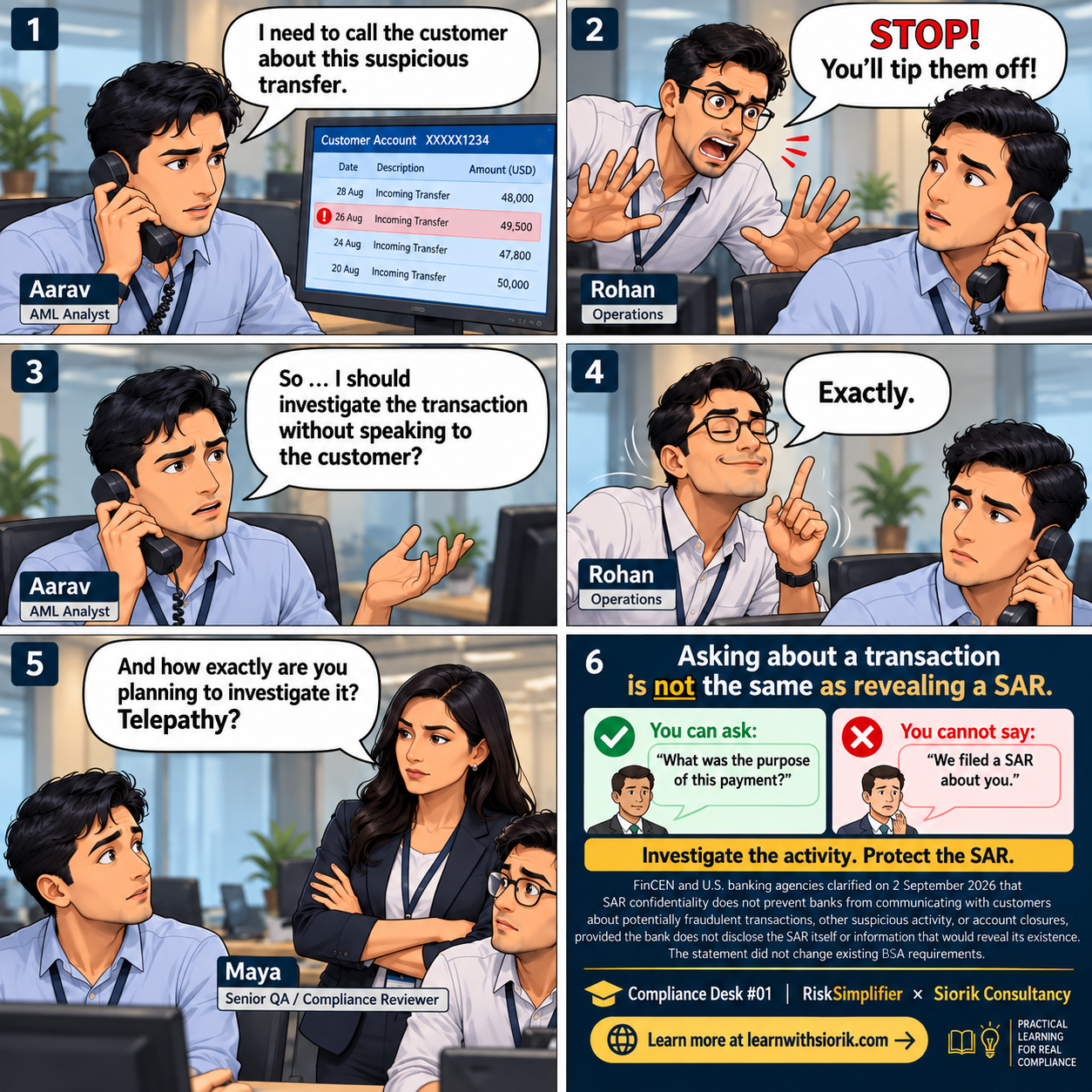
The comic turns a common compliance misunderstanding into a practical example.
Compliance Desk #01
Can an AML analyst question a customer about an unusual transaction without tipping them off? This episode explains the important distinction between investigating the underlying activity and improperly revealing that a Suspicious Activity Report exists or may be filed.
See the idea
The comic turns a common compliance misunderstanding into a practical example.
Watch the context
A short workplace scenario explains the same idea in a few seconds.
Go deeper
Deeper analysis Siorik Consultancy
FinCEN and U.S. banking agencies recently clarified an important distinction between legitimate customer communication and improper disclosure of a Suspicious Activity Report. The full article examines what this means for AML investigations and internal procedures.
Read Full AnalysisThe LearnWithSiorik explanation
AML investigators sometimes become overly cautious when they hear the phrase ‘tipping off.’
The concern is understandable. Suspicious Activity Reports are confidential, and institutions must not disclose that a SAR has been filed or reveal information that would expose its existence.
But that does not mean an investigator can never speak to the customer.
An institution may still need to understand the underlying activity. For example, an investigator might reasonably ask about the purpose of a payment, the relationship with a beneficiary, the source of funds, or supporting documents.
The important distinction is between investigating the transaction and revealing the reporting process.
Asking: ‘What was the purpose of this payment?’ is very different from telling a customer: ‘We filed a SAR about you.’
That distinction matters because effective AML investigations require evidence. A customer explanation may form part of that evidence, although the explanation should still be assessed against available documentation and transaction behaviour.
The practical takeaway is simple: Investigate the activity. Protect the SAR.
Educational content only; requirements and terminology vary by jurisdiction.
Related learning